
Breaking the Stalemate: Rethinking Ukraine’s Military Strategy
How Soviet-Era Tactics Are Hindering Progress and Why Western Joint Operations Hold the Key to Victory

I’ve never considered myself a “thought leader” or one of the big thinkers on military strategy. My career was fairly humble, and I never attained the level where my opinion could influence national policy or strategic decision-making. However, I was well-trained and have managed to retain some of that knowledge well after I retired.
For the past two and a half years, I’ve followed the war in Ukraine with interest. While I chose not to follow the blow-by-blow fighting on the front lines, I’ve been keenly interested in the war at the operational and strategic levels. I deeply admire the bravery, ingenuity, professionalism, and resilience of the Ukrainian military and people and have always believed in the righteousness of their cause. Their ability to adapt to the realities of drone warfare and to locally adapt equipment is unparalleled. I still believe that their incursion into Kursk and their effective annihilation of the Russian Black Sea Fleet were brilliantly executed.
However, I have also been a fairly vocal critic of Ukrainian tactics since the initial defeat of the Russian invasion. A lack of tactical acumen and planning has directly led to the stalemate we see now. This is not the fault of Ukrainian soldiers, who have displayed consummate skill at the lower levels. Instead, I believe it’s due to a lack of imagination and training in the senior leadership.
Despite this, this article will not directly address the situation in Ukraine. Instead, I wish to point out some measures, adapted from Western training and doctrine, that might be employed to good effect. I realize that, in doing so, I leave myself open to criticism for being an armchair quarterback and for questioning officers who are there and actually fighting. So be it. I’ve seen far too many videos of single-vehicle actions and unsupported offensive tactics to assume that these are deliberate tactical decisions at work.
Lingering Soviet Thinking
After over two years of war, I have a lingering suspicion, admittedly without direct evidence, that old Soviet habits are still alive and well at the senior levels of Ukraine’s military leadership. This is historically characterized by rigid thinking, an unwavering commitment to a single course of action, tight control over tactical decision-making (resulting in a lack of initiative), and extensive use of firepower as a manoeuvre arm. Such tactics can be wasteful and require huge amounts of resources. Worse, they can be predictable and inflexible. One indication of this might be found in the enormous expenditure of artillery ammunition, which is typical of Soviet-style operations. These old habits are likely due to legacy training, a lack of exposure to Western tactics, and a culture slow to adapt.
The Western Way of War
The West’s doctrine, which varies slightly from country to country, evolved from the latter part of the Second World War, was modified by German experiences on the Eastern Front, and was specifically designed to counter Soviet tactics. Where the Soviets could afford to attack en masse with extensive resources, the West, and NATO specifically, had to economize and meet the Soviet threat with innovation rather than a direct response. The result was a system that relied extensively on cooperation between arms and services, technical superiority, and initiative at all levels.
In practice, this system (which still exists) translates into the formation of fighting teams at all levels. At the strategic level, this is manifested in a campaign plan, comprised of several lines of operation, conducted over time, all leading to a final objective, perhaps with phases along the way. One line could be, for example, “deep strike,” and include the Air Force, special forces, and naval long-range strike, all aimed at the final objective, with intermediate objectives and phases along the way. Another could be “suppress air defences” or various non-military enabling measures. The key is that all are integrated into a single plan involving virtually every available resource.
Joint Operations
This “jointness” (and I know you were waiting for the term) extends to all levels. A strategic headquarters coordinates joint operations with strategic and operational-level effects. Again, this might include deep strike operations or a sustained air campaign. At lower levels, air and land resources are fully coordinated, with a joint command system exercising control. This could occur at Army divisional, brigade, or lower echelons.
In practice, this results in the creation of temporary command and control units that integrate all the available capabilities. In Canada, we call these “battle groups,” which are combined organizations with a single command element. A typical battle group will include both tanks and APC-mounted infantry, with embedded combat engineers, supporting artillery, access to close air support, medical, logistics, and communications support. The system is designed to be flexible, with a battle group being armour or infantry heavy depending on the tactical situation. A battle group may have up to 1,200 soldiers and is comprised of three combat teams, which, again, are designed to be tactically flexible. This entire system was employed with stunning effect during the First Gulf War.
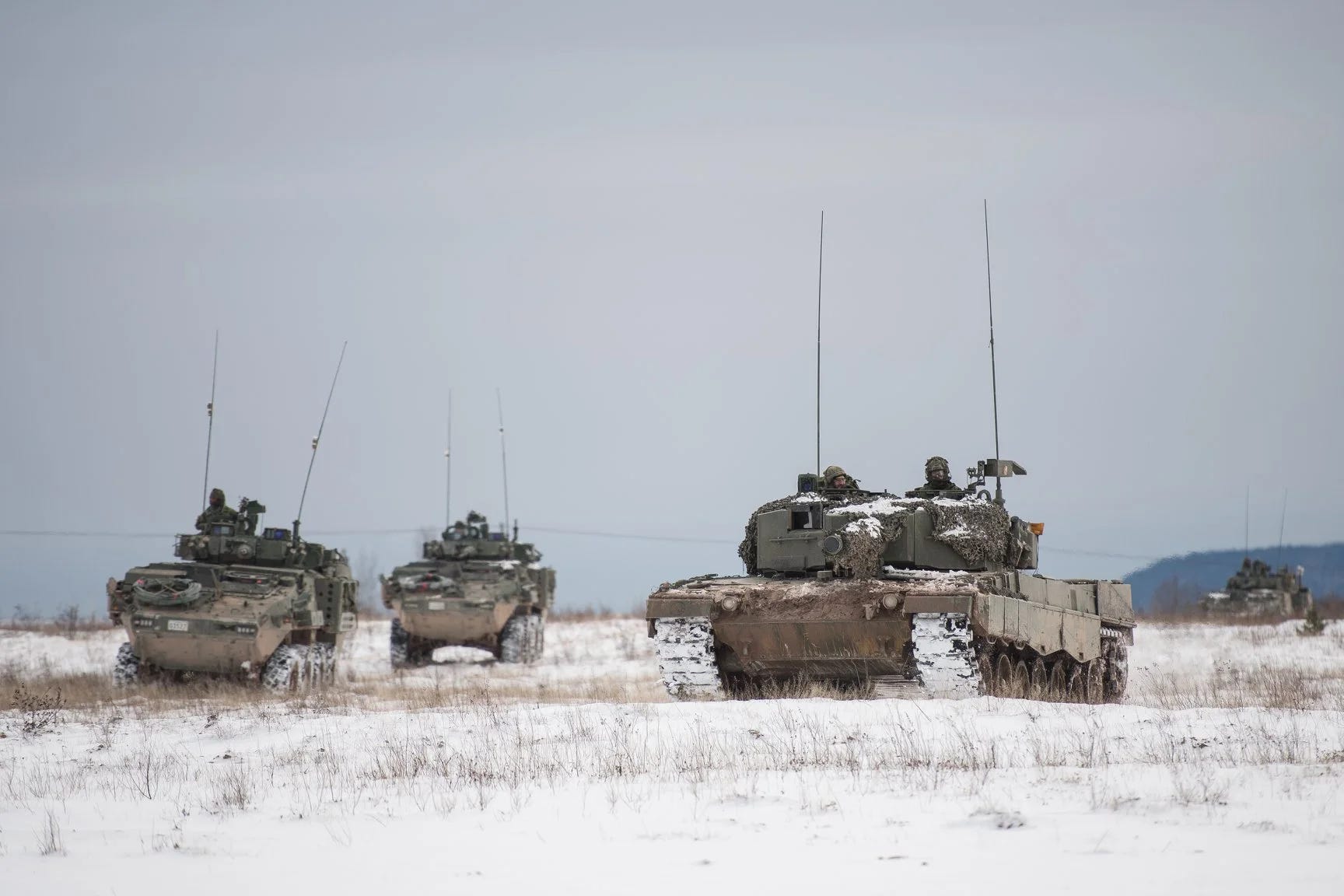
The entire system relies on initiative, flexibility, freedom of decision for tactical commanders, and vertical and horizontal integration of all elements. This concept extends to the lowest levels, where infantry companies always have tanks and other arms embedded into their structure. Similarly, tanks never operate on their own and will always have the support of infantry and other tanks. We rarely see this in Ukraine.
So What?
In practice, this might extend to a suppression of air defence campaign, followed by extensive deep strikes on airfields, assembly areas, and logistics targets. All of this would support an aggressive strategy based on restoring manoeuvre to the battlefield and on the use of integrated, cooperative Army combat units. This system was designed specifically to combat the tactics currently being employed by the Russians in Ukraine.
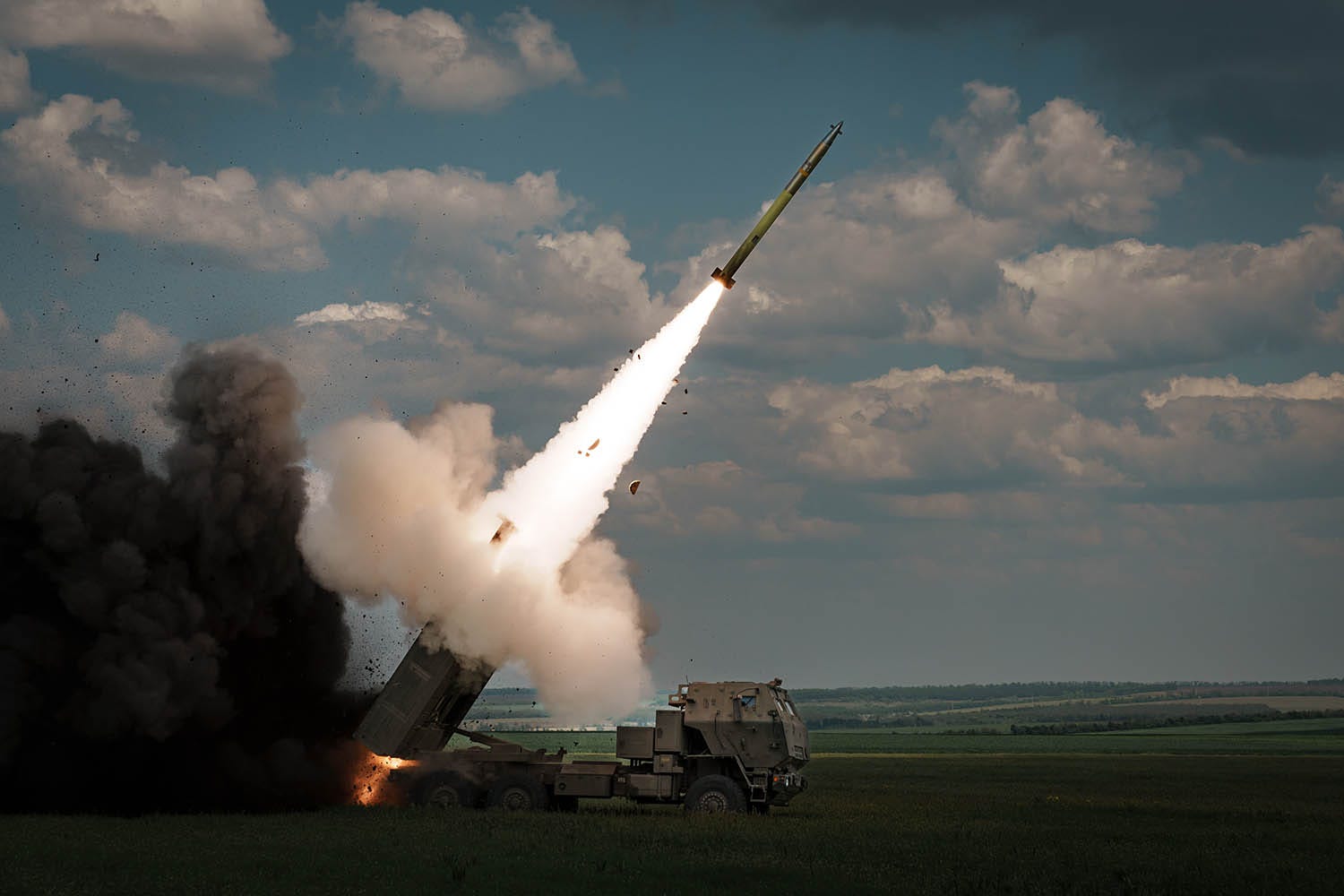
As it is, no technical solution—not F-16s, not HIMARS, and not new armour—will achieve victory in Ukraine, no matter how brave and resourceful the soldiers are. Victory will only come through combined arms innovation and joint operations at all levels, along with extensive technical and logistical support. Without it, the stalemate we’ve seen develop could well become permanent.
Perhaps the key element to the NATO combat strategy is first control the dies, then win the war. That's because with contested skies, tanks and artillery are vulnerable to the enemy's own air campaign.
At the same time, the emergence of small kamikaze drones has further harmed the ability of MBTs to operate the way they were intended. All the armor is designed to protect against anti-tank missiles designed a generation ago. Drones attack the weak points around the turret. This limits conventional use.
The next generation of MBTs is already in the design stage. Future tanks will provide protection from vertical attacks. Until they are available (a decade away?), kluge solutions will be necessary.
In my mind, the Black Sea and Kursk argue against the assertion that Ukraine's military is mired in WWII thinking.
If you follow the evolution of these concepts, from active defense to airland to full spectrum, I think it would too much to ask from Ukraine to jump to this concept immediately. What is realistic is the 1970's style active defense.