
Behind the Scenes: A Soldier’s Experience with Veterans Affairs Canada
I Delve Into the Veterans Affairs Labyrinth

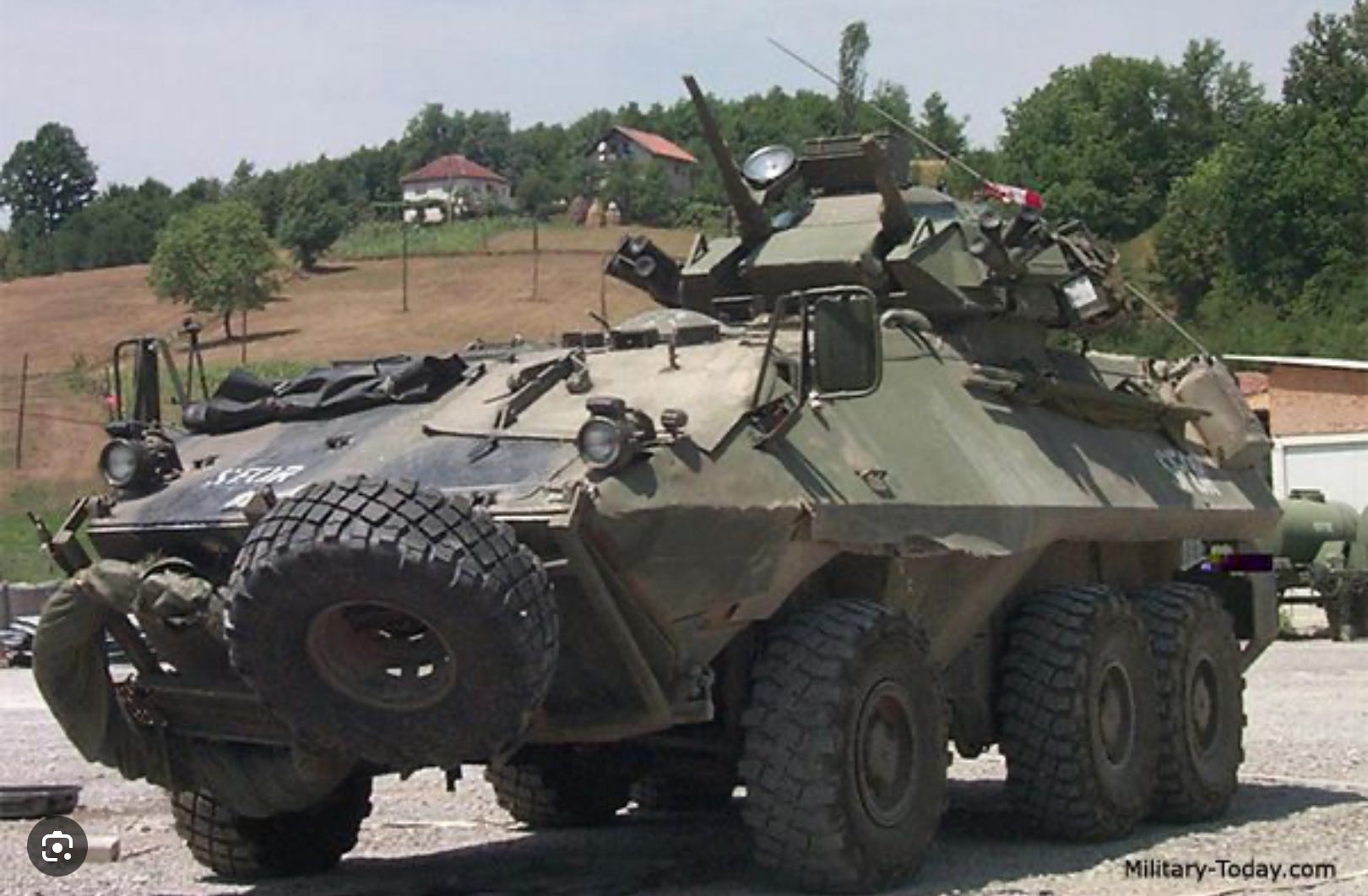
We were driving much too fast through the training area when the old basement emerged unexpectedly, hidden among the scrub and weeds. Rubble from its eroded foundations lay scattered after 50 years. Our Grizzly Armoured Personnel Carrier—a large six-wheeled vehicle designed to transport troops safely across rough terrain—suddenly slammed into the empty hole, jolting forward and splattering the squadron's breakfast of bacon and eggs across the troop compartment.
As a very junior officer standing in the rear hatches to observe, I was thrown out of the vehicle but managed to hold on, avoiding being fully ejected. However, in the process, my shoulder twisted and dislocated as I slammed onto the hatch ring, writhing in agony. I was the only one seriously hurt, though the crew commander and driver suffered some bumps and bruises. After the shock wore off, I was taken to the squadron ambulance for treatment that was only marginally better than the old Army joke: "Here’s some Cepacol and Tylenol."
Despite the injury, I never left the field, and no formal record of the incident was made. I was given five days of "light duties," which, in an armoured vehicle, is hardly light. I was 24 at the time, and though my shoulder bothered me on and off for years afterward, I didn’t seek further help. At 47, after being retired due to other injuries, a civilian examination revealed "severe" arthritis extending into my neck, undoubtedly the result of past trauma. This explained the severe nerve pain, numbness, and even my inability to hold a pen properly. It has gotten progressively worse and I decided to approach Veterans Affairs Canada (VAC) a few months ago.
My story is typical of many soldiers. Injuries sustained in service often aren’t properly documented, and misplaced pride drives us to return to duty as quickly as possible. Years later, when the injury leads to chronic problems, the soldier has little more than a fading memory to rely on when seeking compensation or assistance from VAC. No witnesses, no medical records—just the lingering pain. Imagine being told you have nerve issues so severe you can’t hold a pen, yet being asked to prove when and how it happened decades after the fact. Veterans like me often face this challenge when dealing with VAC.
To many veterans, VAC represents an uncaring bureaucracy, more interested in saving money than helping those who served. One reason for this perception is the reliance on clear-cut cases, especially those with full military documentation. VAC's preferred form of evidence is a CF-98 form, a Report of Injury, filled out by a superior immediately after an incident. This form links the injury directly to military service, making VAC’s job easier. But, especially in the past, CF-98s were often forgotten or ignored by supervisors more focused on training and operations than on paperwork. It’s only years later that the lack of proper documentation comes back to haunt veterans.
Without a CF-98, VAC demands "proof" that an injury is service-related. However, as in my case, such proof can be impossible to obtain. Memories fade, people retire, and details like dates and names are lost to time. Don’t ask me who was crew commanding the Grizzly during my accident—I couldn’t tell you, and the exact date of the incident is long gone. For VAC, no documentation means no proof, which makes the veteran’s frustration all the more understandable. Picture being in a car accident but being told by your insurance company that they need evidence from the scene to help you—20 years later. For veterans, that’s the reality. We are asked to provide documentation that’s often long lost or never existed in the first place.
Even in cases with thorough documentation, the wait for decisions is long—typically at least six months. In the meantime, veterans are left in limbo, with little feedback or updates. Applications seem to vanish into thin air.
The roots of this delay trace back to the early 2000s, when Canada became embroiled in Afghanistan. For decades, VAC had been handling mostly "old" veterans from the Second World War, Korea, and peacetime duty. The pace was slower, and there wasn’t a huge need for adjudicators. Then came Afghanistan, with its full combat operations and over 40,000 soldiers cycling through the country, often on multiple deployments. Injuries, both physical and mental, piled up, overwhelming the system.
Compounding the problem was the introduction of the New Veterans Charter. The charter, widely criticized for being unfair, replaced traditional pensions with lump-sum payments, leaving newer veterans feeling short-changed compared to older ones. VAC was forced to adjust its policies, essentially creating two types of veterans: those receiving pensions and those receiving a lump sum. The Charter was sold as an improvement, with better access to services and supports, gaining the support of the Royal Canadian Legion, but not of veterans in general. It created a gap between veterans of the Cold War and younger veterans of Afghanistan and other operations. The resulting bitterness, even after some changes were made, persists to this day.
Successive governments have promised to fix the system, but real progress has been slow. Meanwhile, the frustration lingers. VAC offices have become high security fortresses and many veterans have come to see VAC as the enemy. Some fixate on VAC as the source of all their problems, believing they are owed by the government and by wider society. It’s a recipe for high drama and deep resentment, exacerbated by wait times measured in months or years.
VAC has attempted to address this by adopting a more respectful approach, hiring more adjudicators, and making presumptive decisions about “routine” injuries suffered during military service. The effect has been debatable, and systemic problems remain.
In the fiscal year 2022-23, Veterans Affairs Canada (VAC) saw a significant volume of applications. By the end of the year (March 2023), they had received around 32,000 applications for disability benefits. This marked a continuation of a growing trend, as there had been a 61% increase in applications since 2015-16.
VAC has been working to process these applications faster, reducing the backlog by 43% in 2022-23. However, by the year-end, 6,621 applications were still over the service standard (Veterans Affairs Canada) (Office of the Auditor General).
As for me, VAC eventually sorted most things out after three years of back-and-forth. Due to my multiple injuries, I was designated a "complex case" and assigned an outstanding case manager who advocated on my behalf. The system can work, but it takes time and perseverance. However, I’m one of the lucky ones. Thousands of other veterans are left to navigate the bureaucracy on their own or rely on Legion Services Officers to help them through the maze.
As citizens, it’s crucial to understand the challenges veterans face and to support reforms that ensure those who serve our country receive timely care and assistance. You can help by supporting veterans’ organizations, advocating for policy changes, or simply being more aware of the ongoing struggles of those who’ve served.
Unfortunately, the system remains largely unchanged after two decades, and the frustration persists. My own case manager, after doing an outstanding job in assisting with services and benefits for my prior injuries, cut me loose about five years ago, and now I’m back to managing my new shoulder claim by myself. It’s somewhere in the queue, but I’m not very optimistic. After all, I don’t have a CF-98.
As it typical of the bureaucrats - regardless of who is in government - they act like it’s their own personal money that they give out. They are unwilling to tolerate the risk of even a single person defrauding the system, so they treat everyone like they’re trying to cheat. It’s the same mindset that is still requiring loads of paperwork and signatures to simply go on TD and do your job. I suspect - in both cases - that it would actually cost less to just trust people up front and take the money back if they lied, than it does to spend countless person-years of work thoroughly investigating each claim.
In Haiti in 1995 I was hospitalized for three days in a US Combat Support Hospital (‘Cash’) after inadvertently drinking tainted water. I was assured that my medical record would indicate that medical intervention but, of course, there’s nothing in my service file. Since 1998 I have suffered gastrointestinal problems but have no evidence to support my assertion that I was potentially exposed to a pathogen.
VAC spends more energy on refusing claims than it does trying to help veterans.